Operating range from deep cold-soak conditions to elevated internal enclosure temperatures.

Launch, sustained flight, and platform-specific shock and vibration spectra.

Conduction-cooled and hermetically sealed assemblies — every watt exits through the wall.

Size, weight, and power budgets that exclude bulky air-moving solutions.

Repeated hot-cold transitions across orbital sun/eclipse cycles and mission profiles.

Concentrated dissipation from compact processing, RF devices, and power amplifiers.

Multi-year operation without working-fluid loss, wick degradation, or seal failure.

Environmental and qualification test stacks scoped to the platform's mission profile.
| Challenge | Vapor Chamber | Heat Pipe | Thermosiphon |
|---|---|---|---|
| High heat flux | ✓✓✓ | ✓ | ✓ |
| Long transport distance | ✓ | ✓✓✓ | ✓✓ |
| Gravity assisted | — | — | ✓✓✓ |
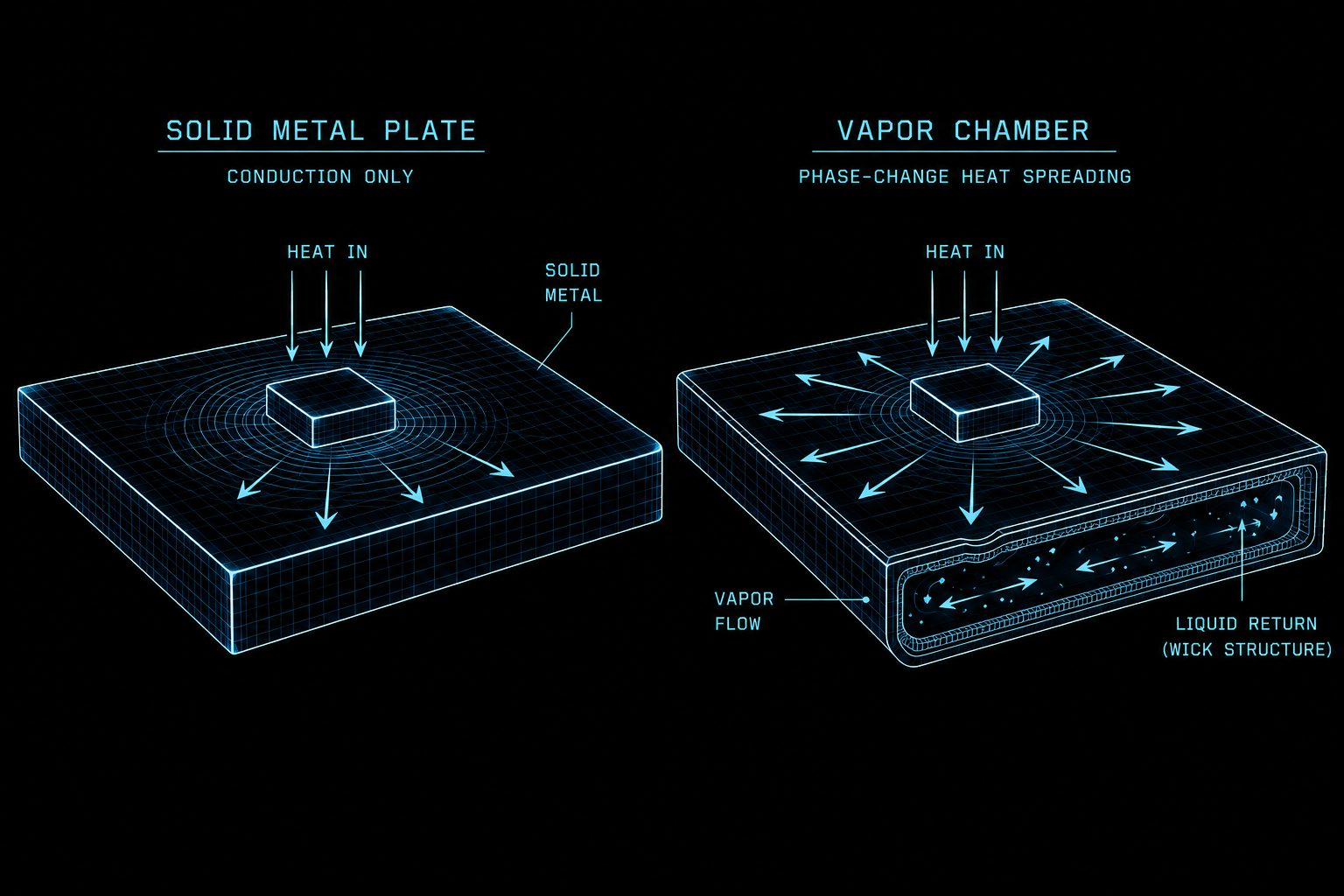
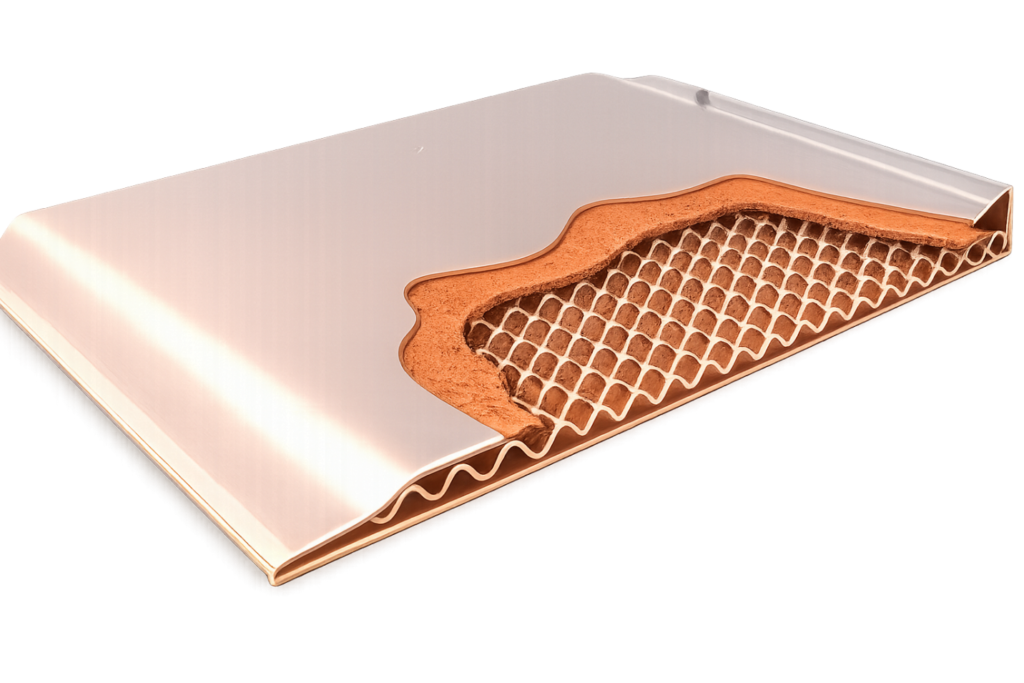
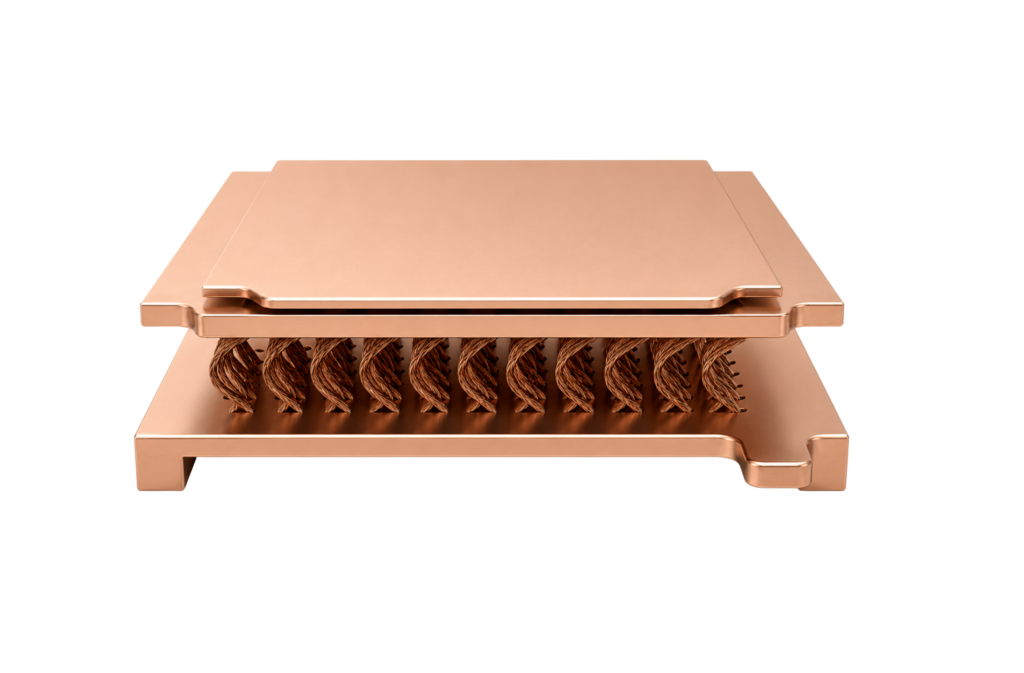
| Thin package | ✓✓✓ | ✓ | — |
| Large spreading area | ✓✓✓ | ✓ | ✓ |
✓✓✓ strong fit · ✓✓ capable · ✓ possible · — not suited

Fluid and envelope material matched to the operating window: water with copper for room-temperature ranges, methanol or alternates where cold-side excursions exceed water's freeze tolerance.

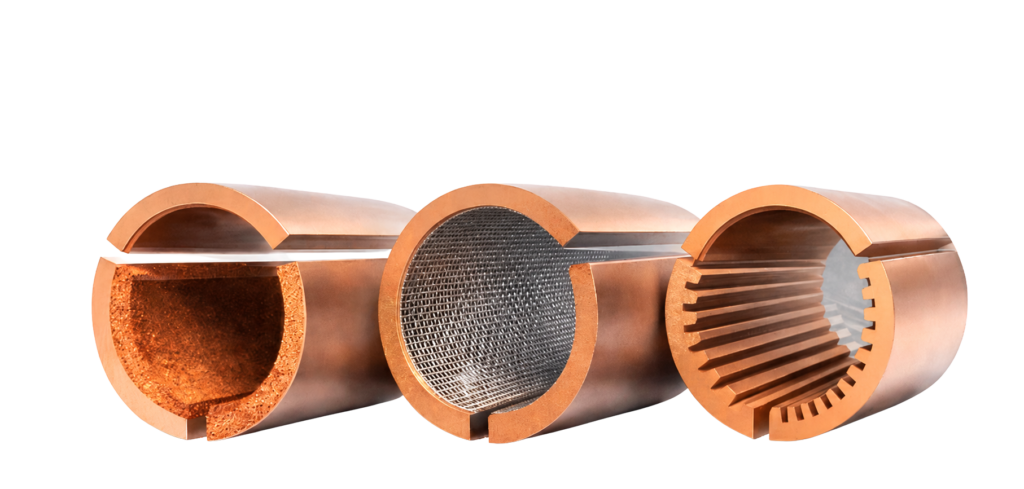
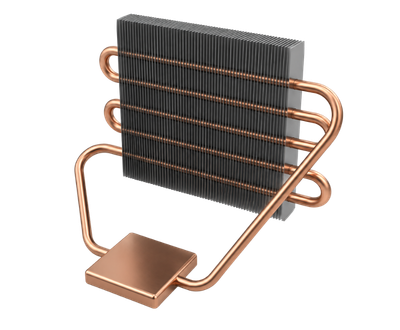
Sintered, screen, or grooved wicks selected for the orientation, acceleration, and environmental cycling requirements — not for cost.

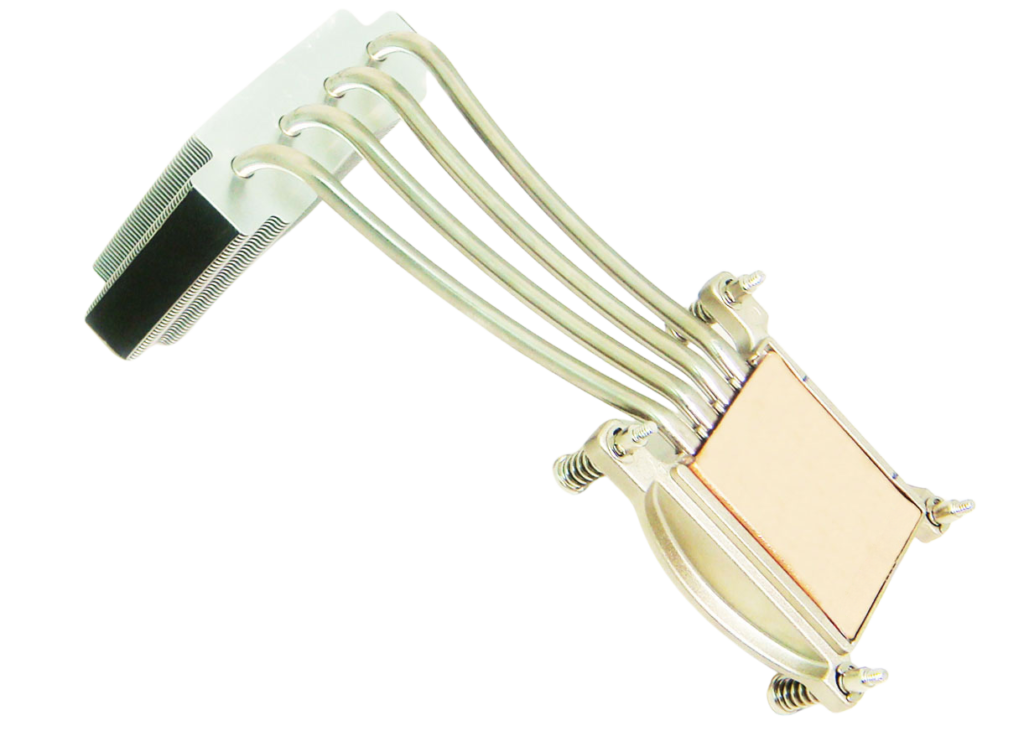
Heat pipe Qmax and capillary performance evaluated against the application's orientation and load profile.

Applied where transient or cyclic heat loads benefit from latent-heat buffering.

Fin geometry sized for the rejection environment of the application — airflow, radiator coupling, pressure drop.

Selected for stable resistance through thermal cycling and compatibility with the operating environment.
Component selection is the easy part. Two-phase systems live or die on the boundary conditions — how heat enters the wick, how it leaves the condenser, how the assembly survives years of cycling without changing. These are the variables our engineers model and verify on every aerospace program.

Hermetic seals verified by high-pressure helium leak check, with internal pressure margin sized against burst at maximum operating temperature.

Built from material sorted and graded by particle size and distribution, with sintering process controlled for porosity and capillary performance.

Working fluid prepared in-house: water filtered and deionized, alcohol double-distilled, both stored in controlled environment prior to charging.
Thermal management systems for aerospace applications are manufactured and validated to support demanding environmental, reliability, and qualification requirements. Production is structured for low-to-mid volume aerospace programs requiring repeatable thermal performance, controlled manufacturing processes, and full material traceability.

Technical resources to support aerospace thermal design, qualification planning, and integration of two-phase cooling technologies into high-reliability electronics systems.

STEP, IGES, and parametric models for major two-phase product lines.

Heat-pipe sizing, capillary-limit, and fin-efficiency quick tools.

Application notes and technical papers from airborne, orbital, and RF programs.

Process walkthroughs, test footage, and design explainers.