Thermal challenges

Where conventional cooling runs out of headroom.

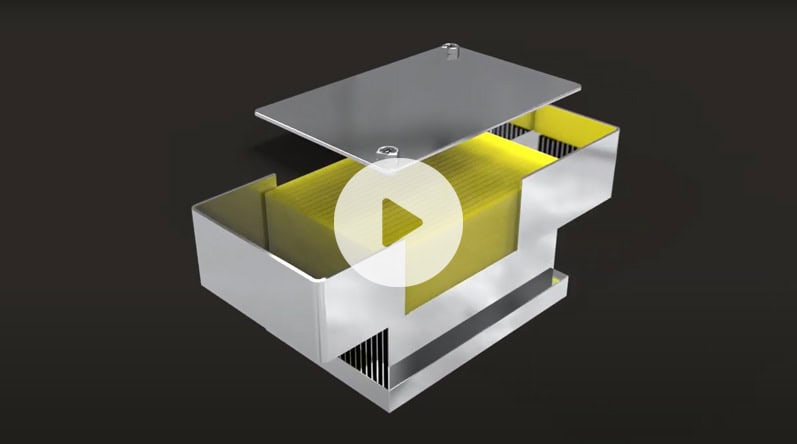
When power density, packaging, and environment collide, a solid-metal sink can’t keep junctions in spec. These are the constraints our two-phase designs are built to solve.
Localized heat flux

Concentrated power at the die or source exceeds what a metal base can spread on its own.

Spreading resistance

Heat crowds at the source faster than it conducts outward, driving up junction temperatures.

Constrained geometry

Tight enclosures, awkward source-to-sink paths, and SWaP limits leave no room for a conventional sink.

Environmental exposure

Shock, vibration, altitude, and thermal cycling demand designs validated for the field, not the bench.

Solution approach

We engineer the complete thermal path.

From source to ambient, every interface is an opportunity to shed temperature. We design the whole chain — spreading, transport, and rejection — as one system rather than a single component.
01
Heat spreading

Vapor chambers and integrated spreaders pull heat off concentrated sources across a wide, isothermal base.

02
Thermal transport

Heat pipes and thermosiphons move heat across distance and orientation to where it can be rejected efficiently.

03
Heat rejection

Optimized fin stacks and heat-sink geometries dump heat into air or liquid within your airflow budget.

Engineering insight

Learn more about system-level thermal design

Thermal management products

Two-phase technology, tuned to your application.

Each device is engineered at every parameter that affects thermal performance — wick, fluid, geometry, and orientation — and 100% tested before it ships.
Customizable heat pipes

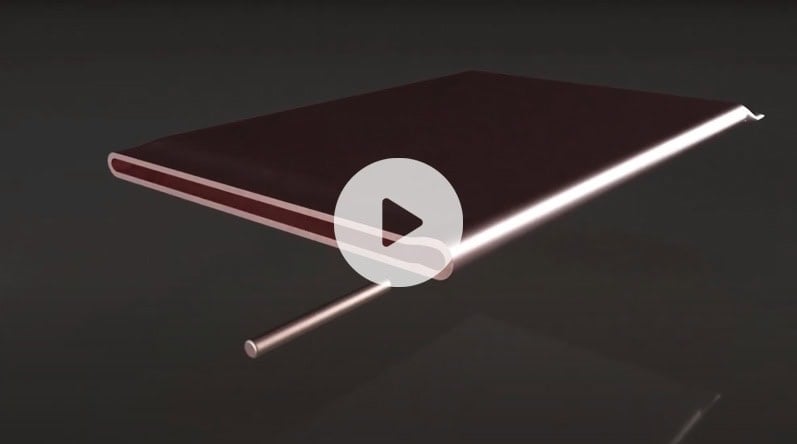
Application-tuned wall thickness, wick thickness, porosity, permeability, and fluid loading.

1-piece vapor chambers

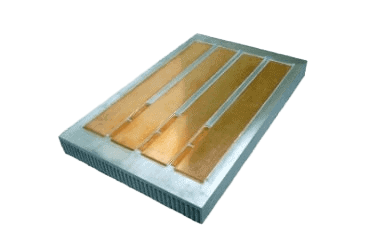
Lower-cost devices allow Z-axis bending in dimensions up to 109mm wide and 5mm thick.

2-piece vapor chambers

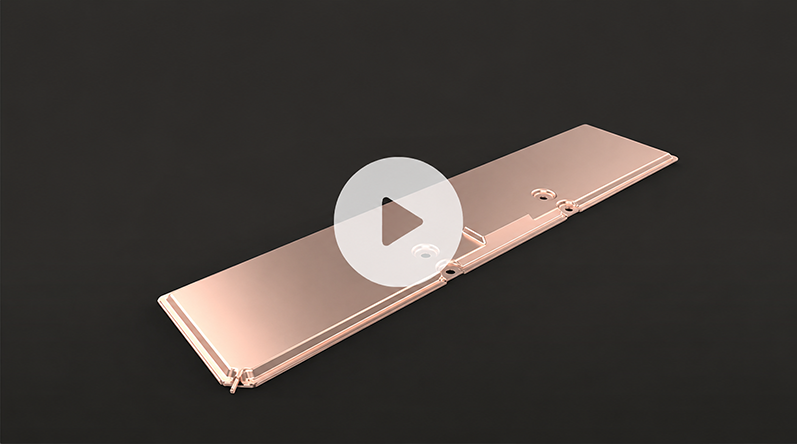
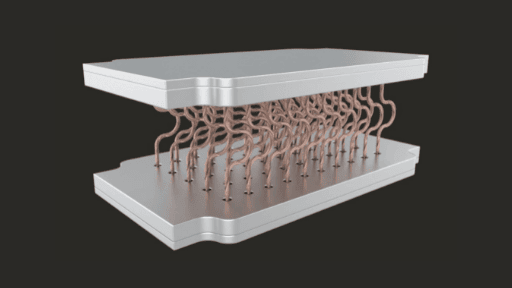
Stamped into any shape along the XY axes, with options for embossments, through-holes, and variable wicks.

Specialty two-phase

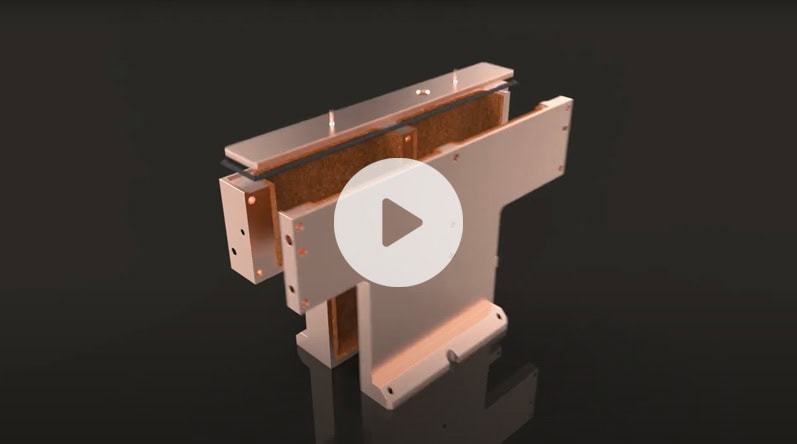
Machined vapor chambers attach to multiple heat sources, while methanol heat pipes extend the range.

Phase change material

Manages substantial transient spikes to ambient temperature or device thermal load.

Thermal straps

Resolves excessive shock, vibration, or thermal expansion issues between the heat source and condenser.

Engineering insight

How two-phase cooling works

A primer on evaporation, capillary action, and condensation — and when two-phase beats solid conduction.

Thermal assemblies

Custom heat sinks & integrated assemblies.

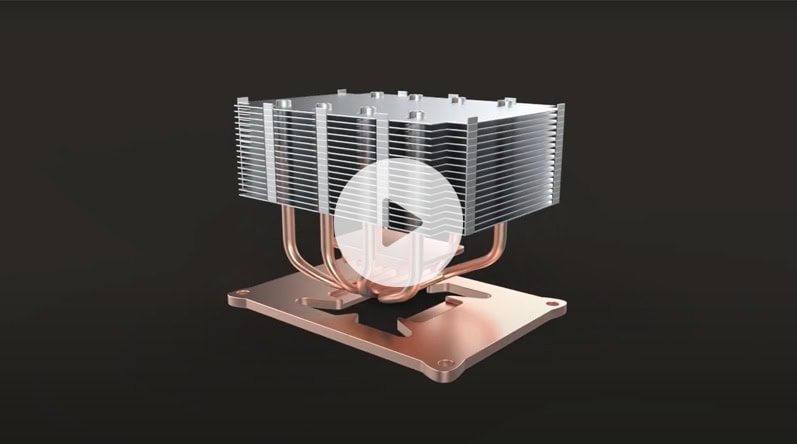
Six manufacturing approaches — selected against heat flux, airflow, packaging, and volume — and combined with two-phase devices into complete assemblies.
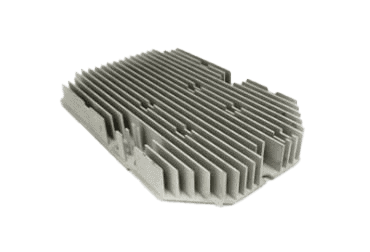
01 Extruded heat sink

Cost-effective design for natural convection applications.

02 Zipper fin heat sink

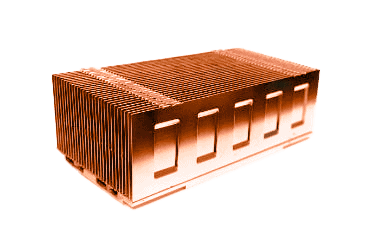
High fin density for controlled airflow environments.

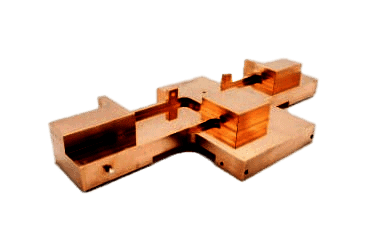
03 Machined heat sink

Offers the most design flexibility for low-volume production.

04 Skived heat sink

High heat flux capability with high aspect ratio possibilities.

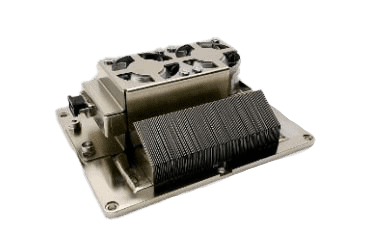
05 Full heat sink assemblies

Provided with attached fins, TIM, and mounting hardware.

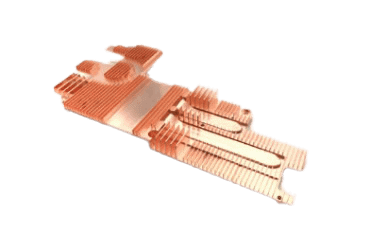
06 Advanced architectures

Designs using 3D vapor chambers or square heat pipes.

Applications & industries

Engineered for demanding environments.

Every industry brings its own thermal constraints and qualification stack. Explore how we engineer to each — and where our work has shipped.

Defense electronics

Ground, airborne, and naval systems where ruggedization and survivability are non-negotiable.

MIL-STD-810 shock & vibration
Sealed conduction-cooled enclosures
−40 to +85 °C operation

Aerospace systems

Avionics and payloads where mass, altitude, and low airflow drive every thermal decision.

DO-160 environmental
Low-pressure / low-airflow
Mass-optimized SWaP

Telecom

High-density, continuous-duty equipment in outdoor cabinets and dense data-plane hardware.

Continuous-duty 24/7
Outdoor cabinet temp swings
High board-level density

Other applications

Wherever heat flux, density, or reliability outruns conventional cooling.

Medical & Diagnostic Equipment
Industrial Electronics
High-Performance Computing
Test & Measurement Equipment
High-Intensity Lighting
Engineering & manufacturing

Design, validation & manufacturing.

A controlled path from concept to production means the thermal architecture you specify is the one that ships — with full traceability at every step.
01
Thermal design & simulation

Rapid modeling validates feasibility — sizing, ΔT budgets, and orientation sensitivity worked out before any hardware is cut.

02
Testing & validation

Correlate models to physical performance — balancing SWaP-C across thermal, mechanical, and environmental envelopes.

03
Manufacturing

Controlled transition from prototype to full scale — material traceability and 100% testing on every two-phase device.

Bring us your thermal envelope, your loads, and your packaging constraints.
Certifications & compliance

Qualified, registered, compliant.

Documentation and process controls that meet the requirements of regulated programs — from quality management to export control.
ISO 9001 Certified
ITAR Registered
RoHS & REACH Compliant
MIL-STD Environmental Support
About us

Validated reliability. Documented performance.

Established
Founded 2004

U.S. Corporation

Innovation
30+ Active Patents

Two-phase technology

Partnership
91% Retention

8-year customer average

Who we are

What differentiates Celsia among thermal management companies.

For applications where heat flux, space constraints, or reliability requirements exceed conventional cooling approaches.
  • Two-phase expertise across thousands of designs
  • Direct access to engineers throughout the design cycle
  • Full internal control of critical materials and components
  • 100% testing with traceable manufacturing processes

Technical resources

Design tools & technical references.

Guides, notes, models, and calculators built around the questions our thermal engineers get asked most.
CAD Downloads

Models and footprints to drop into your design.

Calculators

Qmax, ΔT, and first-pass thermal sizing.

Applications & White Papers

Worked application notes and deeper two-phase research.

Videos

From wick selection to vapor chamber stamping.

Engineering review

Request engineering review.

Using this form ensures your technical correspondence reaches the right engineering contacts. We commit to fast turnaround on initial inquiries as well as design, prototype, and production orders.

ISO 9001 Certified
ITAR Registered
RoHS & REACH Compliant
MIL-STD Environmental Support

Request Engineering Review

This field is for validation purposes and should be left unchanged.
By submitting, you agree to be contacted by a Celsia engineer. ITAR-restricted technical data should be exchanged through verified secure channels after initial contact.