Industries / Defense

Defense Thermal Management

Solving thermal challenges in rugged defense electronics.
Defense thermal management in power-dense electronics is increasingly constrained by spreading resistance, mechanical limitations, and environmental loading within sealed or ruggedized systems. Two-phase cooling technologies improve thermal transport and temperature uniformity across the thermal path.
Qualified & Compliant

Defense applications cooling with two-phase transport.

Defense applications cooling increasingly depends on two-phase cooling technologies where conduction path limitations, localized heat flux, and environmental loading exceed the practical limits of conventional solid metal spreaders or forced-air cooling. As military electronics become more power-dense, thermal performance is often constrained by spreading resistance and transport capability rather than total heat rejection alone.
Two-phase cooling systems reduce thermal resistance by transporting and redistributing heat through phase change, helping maintain lower source-to-sink ΔT within sealed, vibration-prone, and mechanically constrained defense platforms without adding significant power consumption or moving components.
Heat pipes, vapor chambers, and integrated two-phase cooling assemblies are frequently incorporated into power-dense military systems where passive operation, temperature uniformity, and long-duration reliability are critical to maintaining operational thermal margins throughout the life of the platform.
Environmental envelope

Conditions driving design selection.

Defense thermal management programs often combine multiple design constraints. Selection is driven by the most demanding conditions.
Wide operating temperature ranges
Sealed or conduction-cooled enclosures
Reduced maintenance access
Qualification testing and MIL-STD validation
Shock and sustained vibration
High transient RF and compute loads
Orientation-dependent operation
Sand, dust, humidity, and salt fog exposure
Aggressive SWaP constraints
Long-duration deployment requirements
Applications

Defense thermal management system applications.

Two-phase cooling technologies and integrated thermal assemblies engineered for the operating environments below.
Application 01

Radar & Electronic Warfare

High-density RF electronics generating concentrated heat loads within sealed or vibration-prone enclosures.
Application 02

Ruggedized Embedded Computing

Conduction-cooled VPX systems and battlefield computing platforms where airflow is limited and thermal transport paths are constrained.
Application 03

Directed Energy & Power Electronics

Localized high heat flux requiring low spreading resistance and stable thermal transport under transient loading.
Application 04

Airborne & Vehicle Electronics

Thermal systems exposed to sustained vibration, wide ambient excursions, and constrained packaging volumes.
Engineering partnership

Custom cooling solutions for military & defense applications.

We develop integrated thermal management solutions for defense electronics operating in rugged and environmentally demanding conditions where conduction path limitations, localized heat flux, mechanical constraints, and qualification requirements influence the overall thermal architecture.

Using integrated two-phase technologies and heat rejection assemblies, systems are engineered around the application’s thermal envelope, packaging constraints, and long-term reliability requirements to deliver validated, manufacturable designs for military and defense platforms.
Technologies

Two-phase cooling technologies.

Five core technologies for moving heat through power-dense, ruggedized defense electronics.

Heat pipes

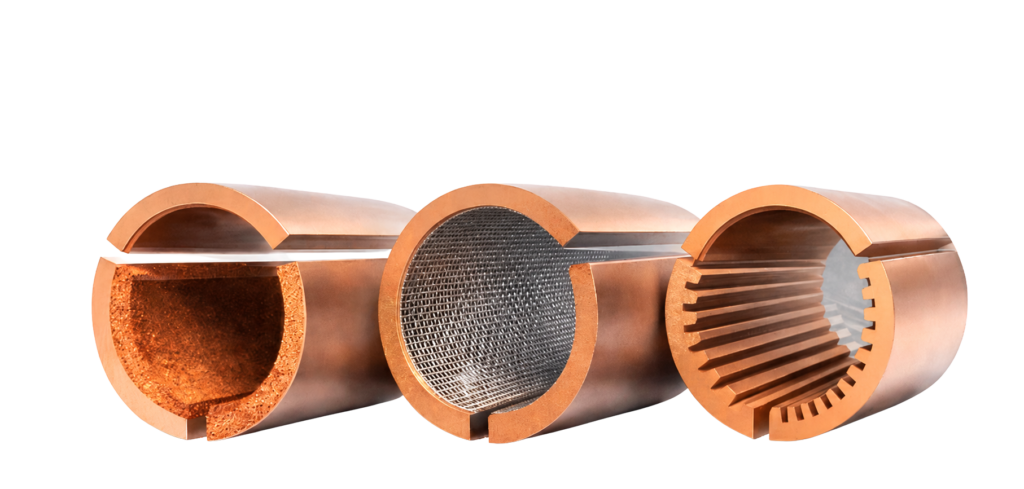
Heat pipes transport heat from board-level dissipators to chassis sidewalls, conduction-cooled structures, cold plates, or remote heat rejection interfaces within rugged defense electronics. Sintered wick structures are selected based on orientation sensitivity, thermal load, shock, vibration, and environmental operating conditions.

Vapor chambers

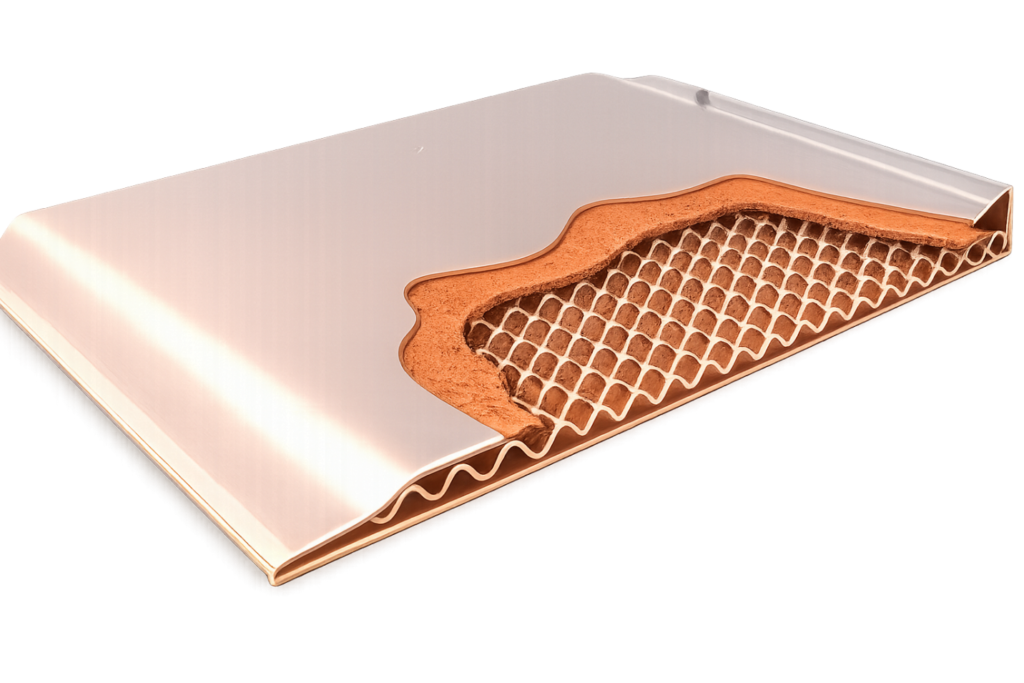
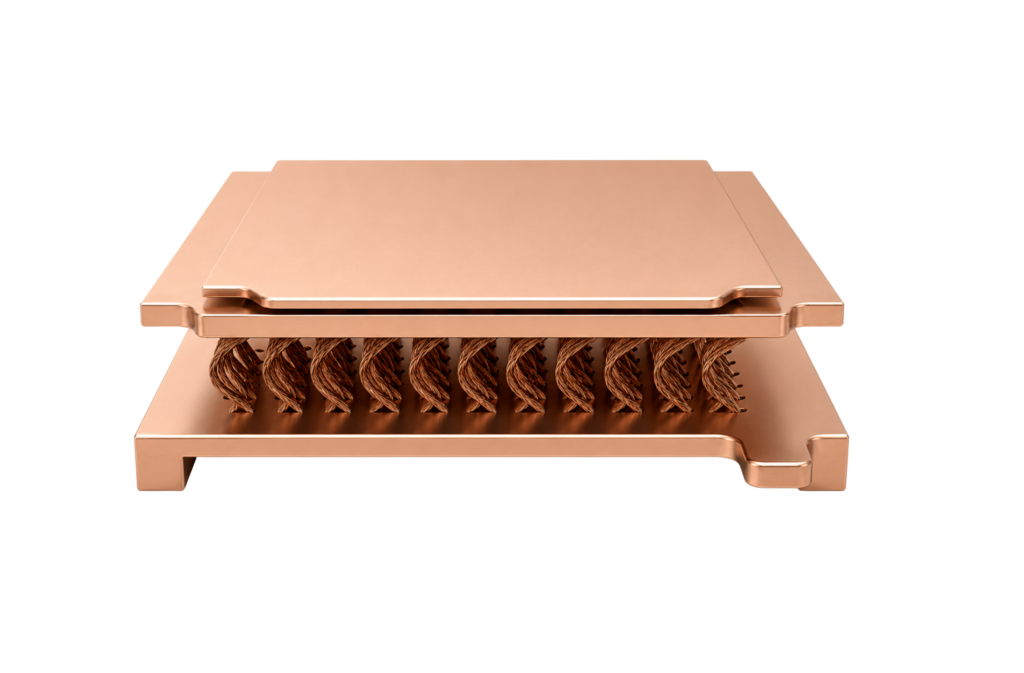
Vapor chambers reduce in-plane thermal resistance and improve temperature uniformity compared to equivalent solid metal spreaders within tightly constrained defense packaging envelopes and high heat flux electronics.

Thermosiphon

Thermosiphons provide high-capacity passive heat transport for defense applications where gravity-assisted condensate return can be utilized to move heat efficiently over longer distances with minimal thermal resistance and no moving parts.

Thermal strap

Thermal straps provide mechanically flexible thermal coupling between heat-generating components and remote cooling structures where vibration isolation, thermal expansion, or mechanical decoupling are required in airborne, vehicle, or ruggedized electronics systems.

Integrated thermal assemblies

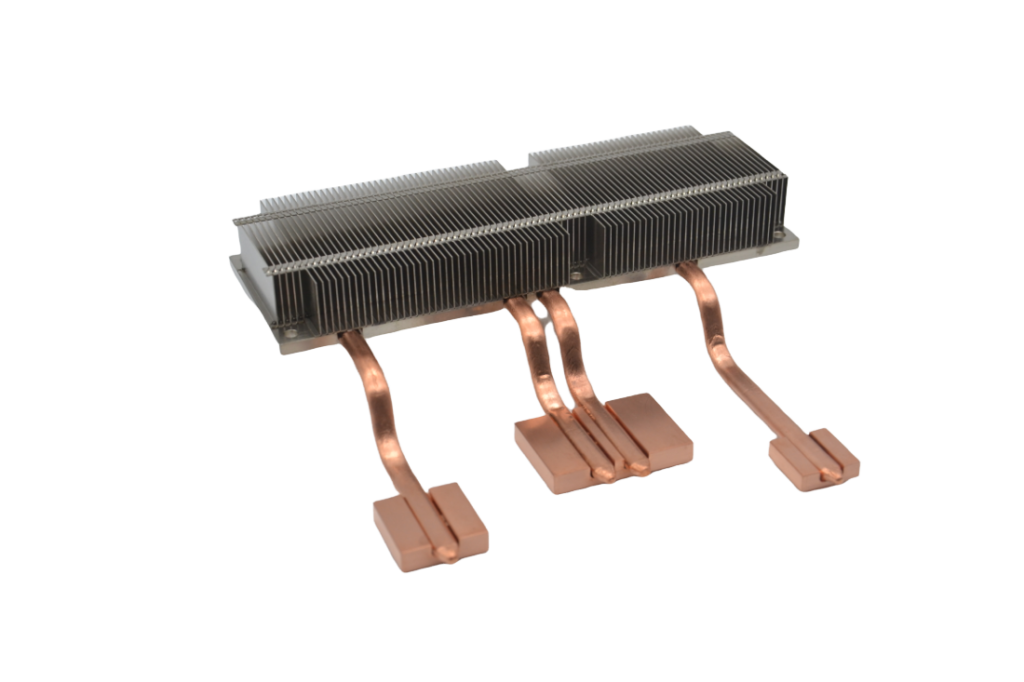
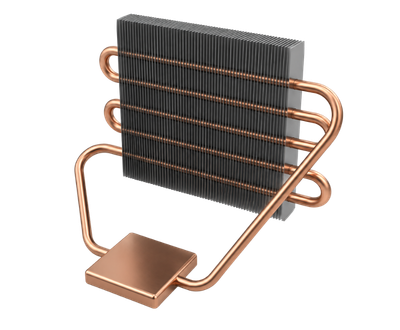
Integrated thermal assemblies combine heat pipes, vapor chambers, thermal straps, heat sinks, and cold plates into complete thermal management solutions engineered around the application’s thermal load, mechanical constraints, environmental conditions, and qualification requirements for defense platforms.
System design

System-level thermal design.

System performance is further influenced by interface materials and heat rejection design, which must be aligned with environmental and operational constraints.
Thermal interface materials (TIMs)

Selected for stable contact resistance through extreme thermal cycling and mechanical loading.

Fin geometries

Optimized for airflow regime, pressure drop, contamination exposure, and constrained enclosure conditions.

Wick structures

Optimized to maintain liquid return under shock, vibration, and variable platform orientation.

Phase change materials (PCMs)

Applied to manage transient RF and compute heat loads while limiting peak temperature excursions.

Capillary limits

Vapor transport margins evaluated against worst-case orientation, acceleration, and thermal loading scenarios.

Freeze/thaw survivability

Assessed to prevent structural degradation or long-term thermal performance drift.

System design

Quality & process control.

Hermetically sealed assemblies

Designed to prevent moisture ingress and maintain long-term thermal performance in harsh operating environments.

Sintered powder wick structures

Engineered for capillary performance, mechanical stability, and survivability under shock and vibration loading.

Working fluids

Prepared and controlled to reduce contamination and support long-term thermal reliability.

Envelope wall design

Thickness and structural design evaluated against altitude pressure differentials, mechanical loading, and environmental operating conditions.

Manufacturing & validation

Rugged thermal management: manufacturing & validation.

Engineered to support MIL-STD-810 environmental validation — shock, vibration, temperature cycling, humidity, and altitude exposure. W/cm²

Common to rugged defense electronics environments and built into every program from First Article forward.
Thermal management systems for defense equipment are manufactured and validated to support demanding environmental, reliability, and qualification requirements. Production is structured for low-to-mid volume defense programs requiring repeatable thermal performance, controlled manufacturing processes, and full material traceability.

Integrated thermal assemblies can incorporate machined, skived, extruded, or bonded-fin heat rejection structures depending on the application’s thermal load, mechanical constraints, and environmental requirements.
Production validation
Why Celsia

Why choose Celsia for aerospace thermal management systems.

Engineering support

  • Direct collaboration with thermal engineers
  • Iterative thermal modeling & CFD support
    In-house or in coordination with customer-executed simulation.
  • Rapid prototype development
  • Concept through validation support
Qualifications & compliance
Qualified & Compliant
Export compliance
Material compliance
Substance compliance

Design tools & technical references.

Guides, notes, models, and calculators built around the questions our thermal engineers get asked most.
CAD Downloads

Models and footprints to drop into your design.

Calculators

Qmax, ΔT, and first-pass thermal sizing.

Applications & White Papers

Worked application notes and deeper two-phase research.

Videos

From wick selection to vapor chamber stamping.

Talk to a thermal engineer about your defense program.

Share your platform, thermal load, and qualification requirements. Our engineering team will respond with a feasibility read and next-step plan for integrated two-phase cooling on your defense program.

Request Engineering Review

This field is for validation purposes and should be left unchanged.
By submitting, you agree to be contacted by a Celsia engineer. ITAR-restricted technical data should be exchanged through verified secure channels after initial contact.