5G thermal management is increasingly constrained by RF amplifier heat flux, higher transceiver densities, and the power demands of massive MIMO architectures operating within sealed outdoor enclosures. As Radio Units (RU), Remote Radio Units (RRU), and Remote Radio Heads (RRH) integrate more power amplifiers, network processors, optical modules, and power conversion electronics into smaller footprints, thermal performance is often limited by heat spreading and transport capability long before total heat rejection capacity is reached.
Modern telecom infrastructure is expected to operate continuously for 10 to 15 years with minimal maintenance access while meeting carrier-grade reliability requirements across wide environmental conditions. Celsia engineers telecom cooling solutions where passive reliability, temperature uniformity, environmental durability, and long service life are critical to system performance.

Telecom network equipment cooling challenges are typically driven by a small number of high-power components rather than enclosure temperature alone. RF power amplifiers, network processors, optical modules, and power delivery electronics often determine the thermal architecture of the entire system.
High local heat flux
Efficiency, output power, reliability
Temperature uniformity across transceivers
RF performance and beamforming accuracy
Increasing power density
Processing performance and thermal margin
Localized hotspots
Reliability and enclosure temperature
Tight operating temperature limits
Signal integrity and service life
Modern 5G radio units increasingly utilize GaN power amplifiers capable of generating local heat fluxes exceeding 100 W/cm². 5G antenna cooling is further constrained as active antenna systems integrate 32, 64, or 128 transceiver channels within a single enclosure, while network processors, optical modules, and power conversion electronics continue to increase in power density as network throughput grows.
Cooling architecture selection is influenced not only by component power dissipation, but also by the environmental and operational conditions in which telecom equipment must operate.
Limited airflow and reduced convective cooling
Reduced thermal margin
Elevated enclosure temperatures above ambient conditions
Orientation-dependent thermal performance
Limited volume available for heat rejection
Reduced use of active cooling methods
Drives reliability-focused thermal design
Reduces acceptable thermal margin
Drives material, fluid, and validation decisions
Common telecom operating conditions include outdoor deployment in direct sunlight, ambient temperatures from -40°C to +55°C or higher, exposure to humidity, dust, salt fog, and airborne contaminants, limited maintenance access, and service life expectations that frequently exceed ten years.
The thermal architecture is often dictated by the equipment type, primary heat sources, environmental conditions, and available installation volume.
High heat flux from GaN power amplifiers operating within sealed outdoor enclosures
Localized amplifier hotspots often exceed the heat spreading capability of conventional conduction paths, requiring heat to be redistributed and transported to available heat rejection surfaces.
Temperature uniformity across 32 to 128 transceiver channels
Thermal performance is frequently constrained by temperature variation across the array rather than peak temperature alone. Uniform heat spreading helps maintain RF performance and beamforming consistency.
High power density within compact deployments
Limited installation volume restricts heat sink size and available airflow, making efficient heat spreading and transport critical.
Increasing ASIC, FPGA, and processor power density
As processing throughput increases, thermal resistance between the device and available cooling surfaces often becomes the limiting factor.
High compute density from CPUs, GPUs, and accelerators
Heat generation increases faster than available space for heat rejection, creating transport bottlenecks within compact edge platforms.
Temperature-sensitive optical modules and networking ASICs
Signal integrity, reliability, and equipment life depend on maintaining stable operating temperatures across critical components.
While every thermal solution is application-specific, these represent common thermal challenges and cooling architectures encountered across modern telecom infrastructure.
Many telecom systems reach the limits of conduction-based cooling before reaching the limits of total heat rejection. The challenge is often transporting heat away from localized hotspots and distributing it efficiently throughout the system.
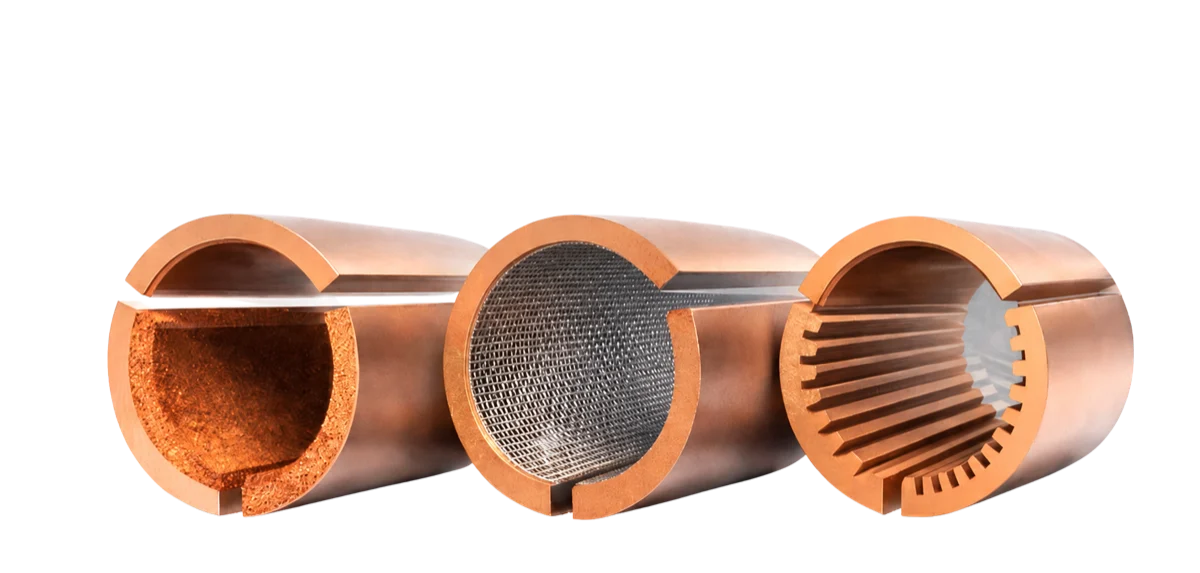
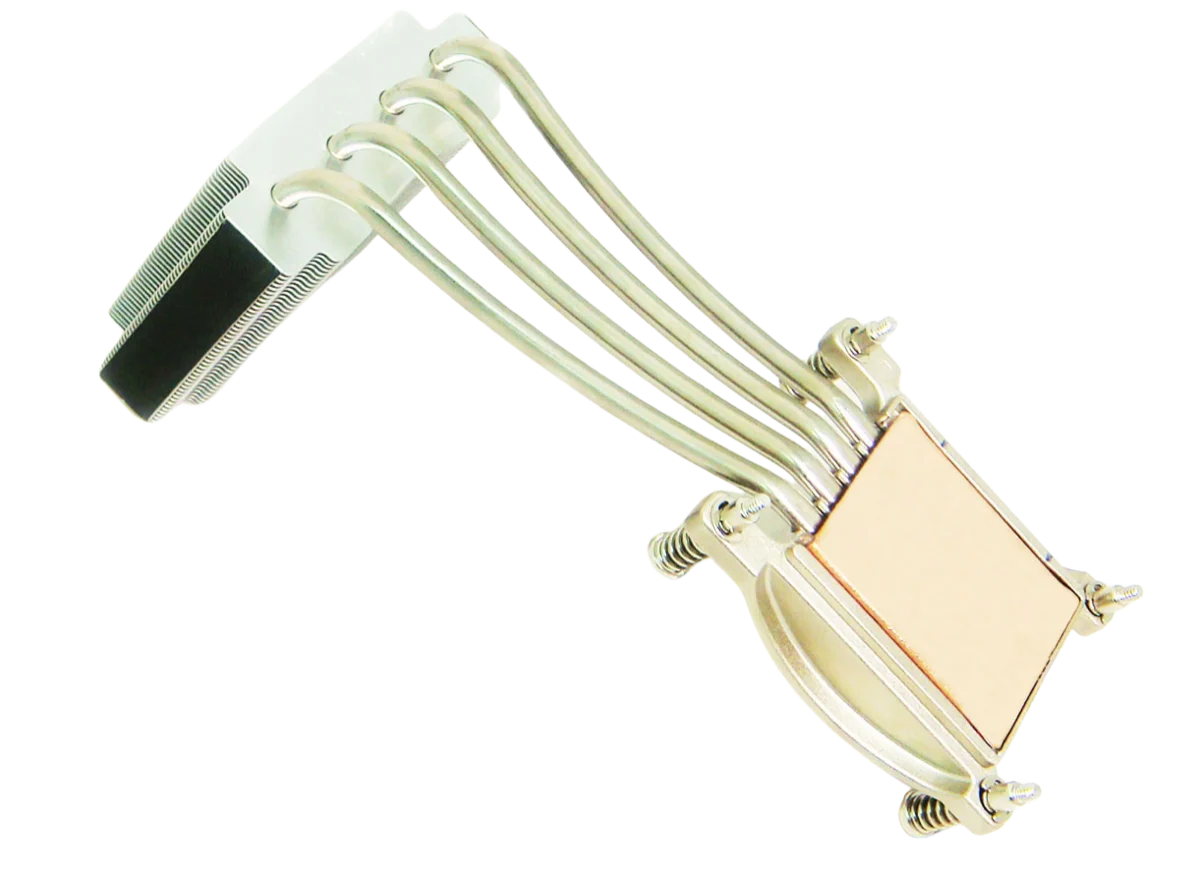
Heat pipes transport heat from RF power amplifiers, processors, power electronics, and optical modules to remote heat rejection structures while maintaining passive operation and long-term reliability. Effective thermal conductivity can exceed 1,500 to 60,000 W/m·K depending on geometry and operating conditions.
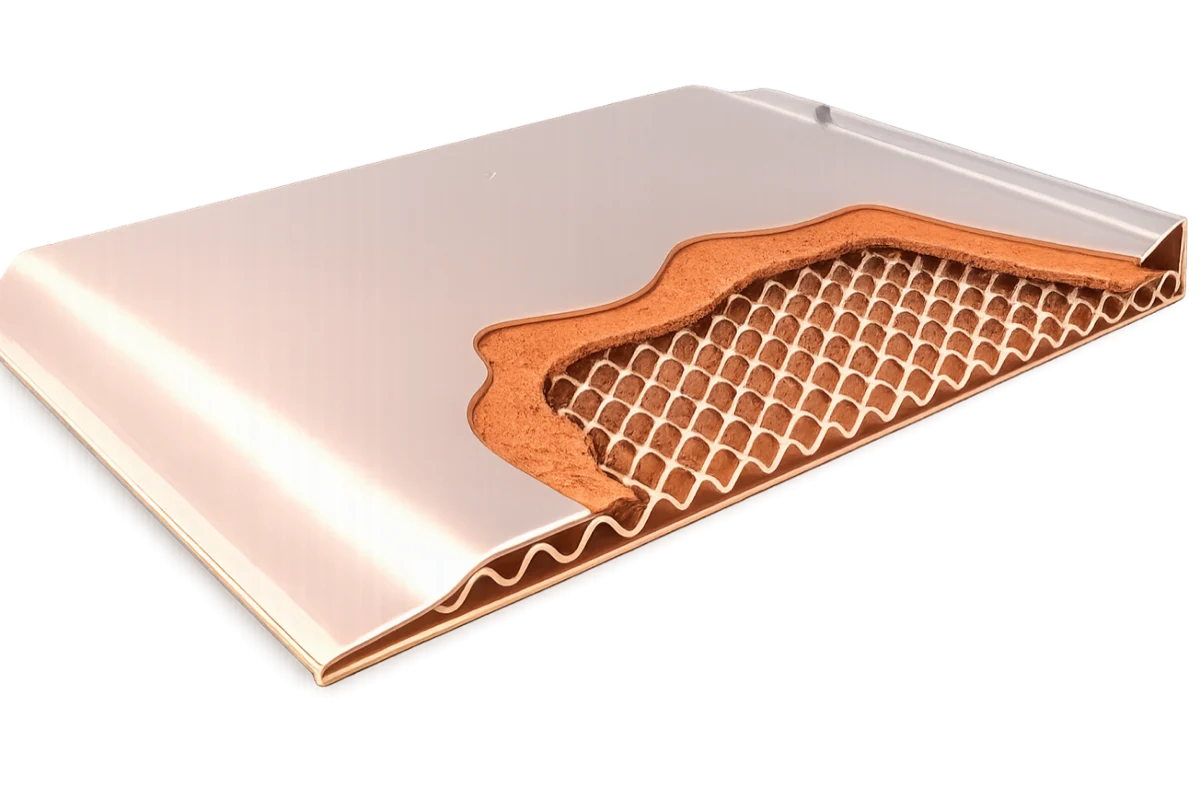
Vapor chambers reduce spreading resistance and improve temperature uniformity across multiple heat-generating devices. They are commonly used when several amplifiers, processors, or optical modules must share a common heat rejection structure.
Integrated solutions combine heat pipes, vapor chambers, thermal interface materials, heat sinks, and other thermal technologies into assemblies optimized around the application’s thermal load, enclosure geometry, environmental conditions, and reliability requirements.
Telecom thermal solutions must perform reliably across a wide range of operating conditions while supporting carrier-grade reliability objectives, long service life expectations, and qualification requirements common to telecom infrastructure deployments.
Validation activities may include thermal performance characterization, reliability testing, environmental evaluation, and design verification to confirm performance under application-specific operating conditions.
Production supports low- to mid-volume telecom programs requiring repeatable thermal performance, controlled manufacturing processes, and long-term reliability.
Technical resources supporting thermal design, qualification planning, and implementation of advanced cooling technologies in telecom infrastructure.
Share your enclosure, heat loads, and environmental requirements. A Celsia thermal engineer will review the thermal path and next steps with you.
DEMO FORM — CONNECT TO YOUR CRM / EMAIL AFTER IMPORT
By submitting, you agree to be contacted by a Celsia engineer. ITAR-restricted technical data should be exchanged through verified secure channels after initial contact.